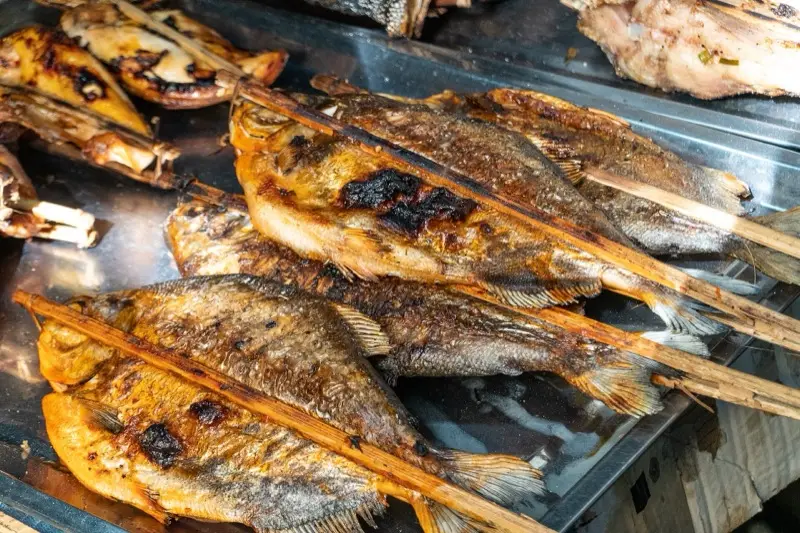
In Kampot and Kep, eat crab fried with fresh green Kampot pepper at the Kep crab market, num banh chok rice noodles for breakfast, fish amok, beef lok lak with a lime-and-pepper dip and, from roughly May to July, durian. Mornings belong to the market, lunch to Kep's waterfront and evenings to Kampot's riverside. In 2026 a market breakfast costs about $1–2, a Khmer main $3–8 and a crab lunch for two around $20–30.
On this page
The short list
| Dish | What it is | Where to try it | Rough price (2026) |
|---|---|---|---|
| Crab with green pepper | Live crab stir-fried with sprigs of fresh Kampot pepper | Kep crab market, at lunch | About $20–30 for two, with extras |
| Num banh chok | Rice noodles under a fish-based curry gravy | Morning market stalls | About $1–2 |
| Fish amok | Fish curry steamed in a banana leaf | Khmer and riverside restaurants | About $3–8 |
| Lok lak | Stir-fried beef with a lime, salt and pepper dip | Most Khmer restaurants | About $3–8 |
| Durian | The spiky, pungent fruit Kampot is proud of | Fruit sellers, about May–July | Sold by the kilo |
| Palm sugar | Sugar boiled down from sugar-palm sap | Markets, Khmer desserts | Varies |
Crab with green Kampot pepper
This is the dish the coast is famous for: live crab stir-fried with whole sprigs of fresh green peppercorns from the farms just inland. In Kep you buy crab by the kilo from the sellers on the waterfront and pay a stall to cook it, or you sit down at one of the restaurants beside the market and order from a menu. Either way, agree the full price, cooking included, before anything goes in the wok. A kilo is about right for two people alongside other dishes.
Kampot's restaurants serve pepper crab too, but in Kep you eat it beside the sea it came from, and lunch is the liveliest time. Our Kep crab market guide explains ordering and bargaining step by step.
Num banh chok: breakfast noodles
Num banh chok is a Cambodian breakfast: soft, lightly fermented rice noodles under a fish-based curry gravy made with lemongrass, turmeric and kaffir lime, topped with fresh greens and herbs. Kampot has its own version, made with peanuts, dried shrimp and the local fish sauce, sometimes with slices of fish cake, and usually eaten cold.
Look for it at morning market stalls, and go early: sellers often run out by 8 or 9am. Expect to pay about $1–2. It isn't vegetarian, because fish is the base of the gravy.
Fish amok
Amok is often called Cambodia's national dish: fish marinated in a curry paste (kroeung) with coconut milk and egg, then steamed in a banana-leaf cup until it sets to a soft, mousse-like texture. It comes with rice; some restaurant versions are soupier. Prices run from about $3 in a simple Khmer restaurant to $8 on a riverside terrace. Many places geared to visitors will make a tofu or vegetable amok if you ask.
Lok lak and Kampot pepper
Lok lak is strips of beef stir-fried in a dark, savoury sauce and served on lettuce, tomato and cucumber. The best part is the dip on the side: lime juice, salt and black pepper, mixed at the table. In Kampot that's Kampot pepper, and you can taste the difference. The same dip comes with boiled crab and grilled seafood.
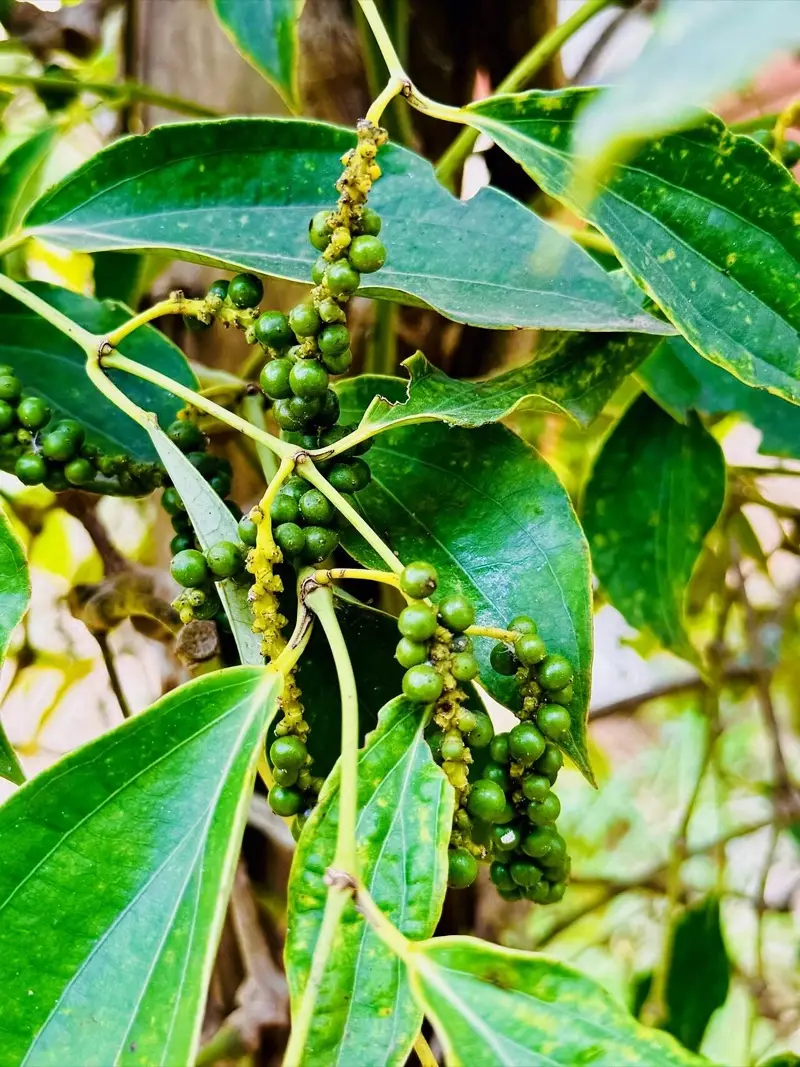
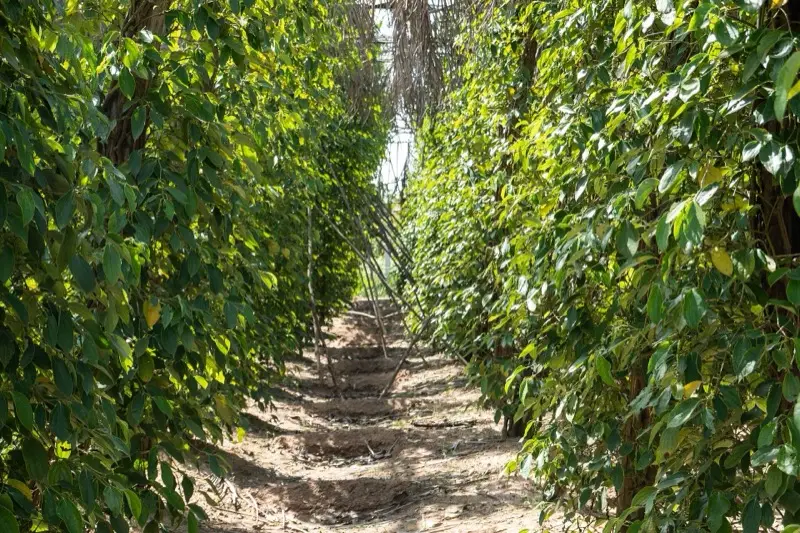
Kampot pepper also turns up in stir-fries with fresh green peppercorns, in pepper sauces and, at La Plantation's restaurant, in ice cream. If you want to understand the four colours before you taste them, read Kampot pepper explained.
Durian: Kampot's other famous crop
The giant durian on Kampot's main roundabout honours the province's historic durian industry, devastated in the Khmer Rouge years and since rebuilt. Kampot is one of Cambodia's main durian provinces, and in 2020 a provincial agriculture official called it the country's largest producer.
- Season: short, roughly May to July. Prices are highest at the start of the season and drop as the harvest peaks.
- Price: sold by the kilo. In 2025 market prices across Cambodia fell from roughly 25,000–30,000 riel ($6–7.50) a kilo in May to around 12,000 riel ($3) at the peak.
- How to try it: ask the seller to choose and open one for you, or buy a few opened segments. Eat it on the spot.
- The smell: it's strong. Many hotels and guesthouses in the region don't allow durian in rooms, so ask before you carry one home.
Palm sugar and sweets
The tall sugar palm, Cambodia's national tree, stands along the edges of rice fields all over the Kampot countryside. Its sap is collected from the flower stalks and boiled down in big woks into palm sugar: a caramel-like sweetener for Khmer desserts and sauces. Some countryside trips stop at a family that makes it; ask if that interests you.
Cambodia's best-known palm sugar actually comes from Kampong Speu province. In 2010 it and Kampot pepper became the country's first two protected geographical indications. Palm sugar makes a light souvenir.
Street snacks and drinks
- Num pang: the Cambodian baguette sandwich, a French-era legacy, filled with pâté, meat or egg and pickles.
- Sugar-cane juice, pressed to order, and fresh coconuts: the best cheap cool-down in the heat.
- Fruit shakes and grilled skewers from the evening carts.
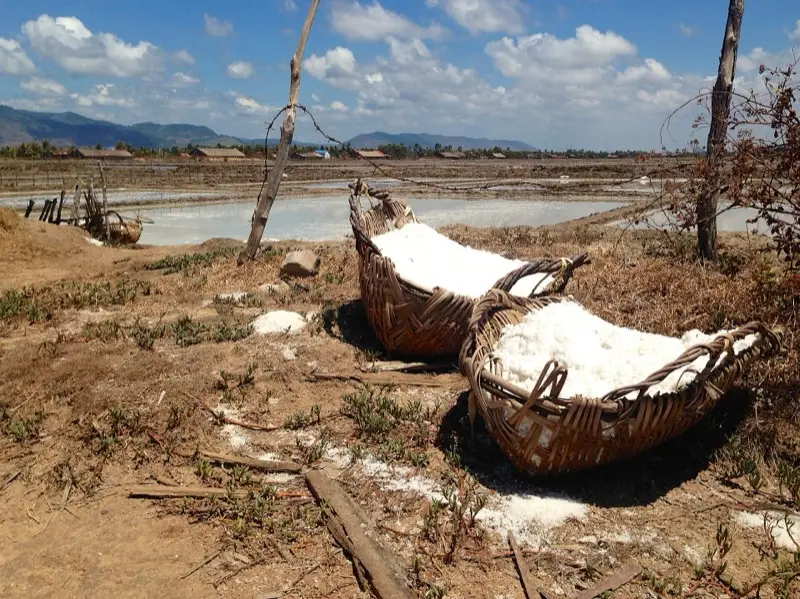
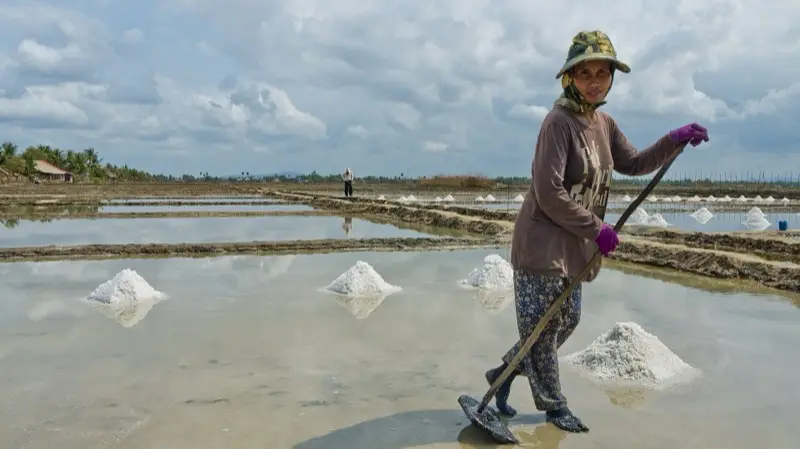
- Kampot fish sauce: made from saltwater fish fermented with Kampot sea salt, by about ten producers in the town. A good gift, but it's a liquid, so pack it in your checked bag.
Where to eat
- Samaki Market, mornings. Kampot's main market, busy and mostly Khmer-speaking. Stalls serve rice with grilled pork, rice porridge, noodle soup and fried rice, usually for about a dollar. Pointing and smiling works fine.
- The old town and the riverside, evenings. An open-air food court in the old town gathers a couple of dozen street-food stalls, and further along the river a more traditional row of carts sets up with little plastic chairs.
- Local Khmer restaurants and riverside terraces. A simple Khmer meal costs about $3; on the riverside, with English menus and sunset views, mains run about $4–8 and a local beer about $1–1.50.
- Kep crab market, lunch. Crab, shrimp and squid cooked to order. See Kampot to Kep by tuk-tuk for getting there.
- La Plantation, 7am–3pm. The pepper farm's restaurant does Khmer breakfast, lok lak and amok.
Table manners and etiquette
- Share. Khmer meals are shared: order several dishes for the table rather than one plate each.
- Spoon and fork. Rice is eaten with a spoon, using the fork to push food onto it. Chopsticks are for noodle soups.
- Agree prices first at stalls without a menu, especially for crab.
- Tipping isn't expected at street stalls. In restaurants, rounding up or leaving a little is appreciated.
- Ask before photographing vendors and cooks. Most say yes.
- Pay in dollars or riel (about 4,000 riel to the dollar), in small notes; change often comes back in riel.
Vegetarian and vegan tips
Kampot works for vegetarians if you ask. Fish sauce (tuk trey), fermented fish paste (prahok), oyster sauce and chicken powder go into many dishes, including ones that look like plain vegetables.
- Be specific: ask for no meat, no fish sauce, no oyster sauce. A note in Khmer script beats pronunciation.
- Easy wins: stir-fried vegetables with rice, vegetable fried rice, tofu dishes, and a tofu or vegetable amok at visitor-friendly restaurants.
- In Kep, the restaurants beside the crab market have menus, which makes vegetable dishes easier to order.
- Cooking class: La Plantation's class can do a vegetarian amok if you ask when booking.
Ride with Seth
Seth's Kampot & Kep Full Day puts the crab market at lunchtime, after the countryside and La Plantation in the morning. If you'd rather spend a day eating the way people here do, from noodle stalls to markets, ask about Your Own Day with Seth. He was born in Kampot and has guided for 12 years. Message him for a fixed quote on WhatsApp.
FAQ
What food is Kampot famous for?
Kampot pepper above all, plus crab cooked with green pepper in nearby Kep, durian, sea salt and its own fish sauce.
Where is the best place to eat crab near Kampot?
The Kep crab market, about 25 km away, at lunchtime. A crab meal for two runs about $20–30 in 2026.
When is durian season in Kampot?
Roughly May to July. Prices drop as the harvest peaks.
Is it easy to eat vegetarian in Kampot?
Yes, if you ask clearly. Many dishes contain fish sauce or fish paste, so say no meat and no fish sauce, ideally with a note in Khmer. Visitor-friendly restaurants usually have vegetable and tofu dishes.
Can I take Kampot pepper home?
Sealed, dried pepper usually travels easily, but rules vary by country. See Kampot pepper explained for how to buy the real thing and pack it.